


What Gets Missed in Multi-Camera Installations?
Introduction
In today’s threat landscape, CCTV is more than a deterrent; it’s a critical layer in any modern security strategy. But while most organisations understand the need for cameras, they often underestimate the technical finesse required to make them effective.
It’s not just about how much you spend or what brand you buy. It’s about intelligent design, strategic placement, and seamless integration. Overlooking the technical details can result in grainy footage, missed incidents, or systems that simply don’t deliver when it matters most.
This guide breaks down the most commonly overlooked technical pitfalls in multi-camera CCTV setups and how to get them right from the very beginning.
Insufficient Planning and Coverage Assessment
The Oversight: Skipping a site survey or assuming a few cameras will “cover everything.” Blind spots go unnoticed. Critical access points aren’t monitored. Environmental changes like tree growth or new signage create future obstructions.
The Cost: Gaps in coverage make your system vulnerable, and correcting poor planning post-installation often means additional equipment and labour.
Best Practice:
Start with a detailed site survey. Walk the property, identify high-risk zones, entry/exit points, and environmental challenges. Use temporary camcorders or mobile apps to test angles before committing to permanent hardware. Your goal? Eliminate guesswork.
Incorrect Camera Type Selection
The Mistake: Choosing one camera type for every situation. A residential bullet cam might work at home but falter in a warehouse. A 360-degree fisheye can offer wide views but lack detail for facial recognition or license plate capture.
The Result: Blurry footage, missed events, and a false sense of security.
Best Practice:
Select the right tool for the task:
- Dome cameras for discreet indoor surveillance.
- Bullet cameras for long-range outdoor visibility.
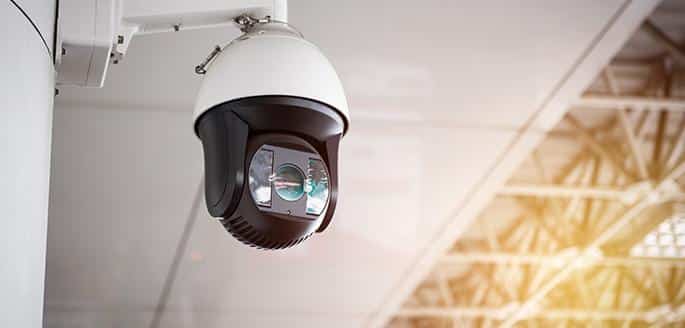
- PTZ cameras where flexible monitoring is needed.
- Thermal cameras for intrusion detection in low light ideally paired with HD for detail.
Tailor your tech to your terrain.
Poor Camera Placement and Angle
The Misjudgment: Mounting cameras too high, placing them behind columns, or facing them toward windows. These placements reduce visibility or invite glare, especially during certain times of day.
The Consequence: You capture lots of footage but of the wrong things.
Best Practice:
Install cameras between 8–10 feet high for optimal facial recognition and perspective. Avoid direct light sources and ensure unobstructed lines of sight to entrances, parking areas, and high-value assets. Always test angles during different lighting conditions.
Power Supply and Cable Management Issues
The Oversight: Running long cable without accounting for voltage drop, daisy-chaining power supplies, or relying on cheap cable to cut costs.
The Risk: Camera outages, degraded video signal, or even electrical fire hazards.
Best Practice:
- Use power supplies rated at twice your total draw.
- For long runs, favour AC over DC and opt for power-over-Ethernet (PoE) where possible.
- Route and secure cables neatly using trunking, labels, and weatherproofing to ensure long-term reliability.
Inadequate Video Transmission Media and Network Design
The Misstep: Mixing coaxial and IP systems without planning for compatibility. Or overloading a single switch with all camera traffic.
The Fallout: Choppy video, dropped frames, or total system failure during high network demand.
Best Practice:
Match your transmission media to your camera types. Use shielded UTP cables for IP setups, separate CCTV traffic from your core business network, and design redundancies to avoid single points of failure. Smart design equals smooth performance.
Insufficient Video Storage Capacity
The Underestimation: Thinking a 1TB hard drive is enough for 10 high-res cameras running 24/7. It’s not. And when the footage auto-deletes after a day or two, critical evidence is lost.
Best Practice:
Use a storage calculator to determine exact capacity needs based on camera count, resolution, frame rate, and days of retention. Choose scalable NVRs with support for RAID configurations or cloud archiving for added security.
Over Reliance on Software for Image Enhancement
The Misbelief: “We’ll clean it up in post.” Spoiler: You won’t. If a camera fails to capture detail in the first place, software can’t invent it later.
Best Practice:
Invest in high-resolution cameras, then place them smartly. Prioritize optical clarity before relying on software. Post-processing should polish your footage, not rescue it.
Ignoring Legal and Privacy Considerations
The Mistake: Installing cameras in private zones like bathrooms, staff lounges, or using audio recording in jurisdictions where it’s prohibited.
The Risk: Fines, lawsuits, and reputational damage.
Best Practice:
Understand local laws about video and audio surveillance. Include legal consultation as part of your planning process. Label camera zones clearly and avoid gray areas. Responsible surveillance is effective surveillance.
Lack of Scalability and Future-Proofing
The Problem: A system that works today but chokes tomorrow. You add five new cameras and the network can’t handle it. Or the software doesn’t support modern codecs.
The Cost: Costly replacements and downtime.
Best Practice:
Design for scale. Use modular components, choose systems with open architecture, and ensure your storage and bandwidth can grow with your needs. Cloud integrations and smart analytics? They’re not just nice-to-have, they’re the future.
Conclusion
A multi-camera CCTV system is only as strong as its weakest technical link. From camera type to cable quality, from legal compliance to storage capacity every detail matters.
But here’s the good news: these pitfalls are entirely avoidable. With thoughtful planning and expert support, you can install a system that performs flawlessly not just today, but for years to come.
At Ushaka Security & Fire Projects, we specialize in future-ready CCTV design that doesn’t just tick boxes it anticipates challenges. Through comprehensive site assessments, expert installation, and forward-thinking technology, we secure what matters most.
Ready to get your CCTV system right the first time?
Let’s design a solution that’s smarter, sharper, and built to last.